
back story: build it
On starting the creative process that would lead to Deiseil: Dancing in Time, we wanted to explore the personal, social, historical and modern contextual issues arising out of the near-extinction and subsequent revival of stepdance in Scotland.
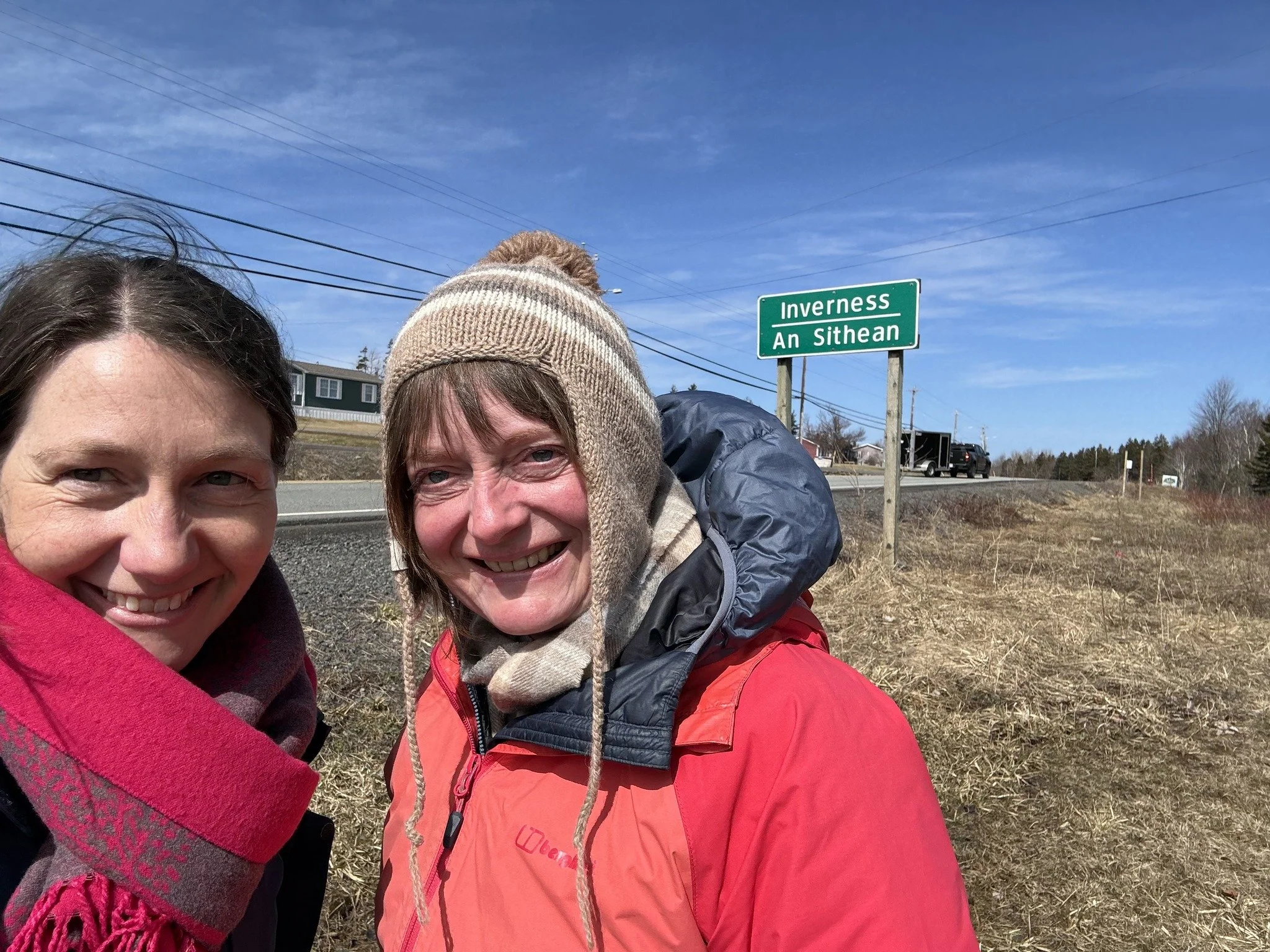
We knew we wanted to focus on stepdance as an integral part of the music and its close connections with Gaelic language and culture. We therefore planned to undertake research and development with artists in Scotland and across the Atlantic, in Nova Scotia, Canada.
At home, we worked with Gaelic singers Anne Martin to learn puirt a beul songs with overt links to dance and Allan Macdonald to explore the rhythmical connection between pipe music and Gaelic language, song and story, making links to the cèilidh house tradition. We had fascinating discussions with Rona Wilkie, Hamish Moore and Rona Lightfoot, delving into the origins of the stepdance revival in Scotland.
We had an online chat with dancers in Cape Breton, who we would later visit. Cape Breton has become the home of stepdance following mass emigration from Scotland, and it was Cape Breton dancers Harvey Beaton and Mary Janet MacDonald who taught us stepdance and shared their tradition with us.
Our initial research and development phase (R&D) was funded by Creative Scotland in 2024 and resulted in a 30 minute work-in-progress as well as some more early concept work for development.
Director Gerry Mulgrew (6 Fringe Firsts) came on board at this stage and the collaborative approach of Amy, Alison and Gerry began to develop.
As the show started to come together, we were already intricately connecting stepdance with the cadences of tunes and Gaelic language, and creating new tunes and steps which blend with traditional material.
Deiseil: Dancing in Time was fast becoming a multi-disciplinary, multi-media performance focused on the role of stepdance in Gaelic society and culture.